Tag

urban smiles Archives - Page 4 of 6 - Urban Smiles Edmonton Dentist

Overcoming dental anxiety. 

By | blog | No Comments

Common dental anxiety. This worry may be difficult for those who are moving or starting a new school. Relocating or starting school might exacerbate dental anxiety. Your smile and dentist’s treatment are unaffected by dental anxiety. Heredity and unpleasant oral experiences certainly cause it. This page addresses dental anxiety and remedies.

What causes dental anxiety?

Some people are genetically predisposed to dental anxiety. Brain chemicals cause anxiety. Dental anxiety may be reduced. Negative past dental experiences cause anxiety in many individuals. Better dental communication and expertise may assist. People with dental anxiety don’t understand oral health or treatments. Discuss dental health with your dentist. Many people dread the pain or intricacy of dental procedures like cleaning or repairs. There are several ways to reduce dental anxiety.

Negative dentist experiences or stigma cause dental anxiety. If you don’t like your dentist, you may feel uneasy. You may have terrible dental experiences. If your dentist gets bad reviews on social media, you may feel anxious before and during appointments. Dentist changes may help.

Uninformed patients may experience dental anxiety. Your dentist may provide dental health advice. People with dental anxiety don’t know how often they should floss, see the dentist, and diet for oral health. Ask your dentist for age-appropriate dental health information.

Some dread the pain or intricacy of dental work. Find a dentist who uses pain-reducing, mouth-calming therapies. You may also brush and floss regularly. Ask your dentist about milder mouthrinses, mouth-calming treatments, and fewer operations to reduce pain.

Dental phobia causes

Negative perceptions regarding persons with impairments, such as having disabilities or not needing dental care. Lack of disability education, including how to seek care and what’s typical for disabled individuals. – Lack of knowledge on how limitations, such as aging-related oral problems, affect daily life. – Dental care beliefs, such as cleaning or repairing teeth is too painful.

Anxiety-reduction techniques

Dental fear may be addressed by researching oral health, disability, and dental health facts. Dentists may discuss oral health, dental anxiety, and regular care. A dental care plan may reduce dental anxiety and guarantee you get regular exams, cleanings, and repairs. – Meet others with your disability – A community of people with your handicap may help you feel less alone, such as when you need dental care or information on aging-related tooth problems.

Common dental anxiety. Better dental communication and expertise may assist. Dental fear may be addressed by researching oral health, disability, and dental health facts. Dentists may discuss oral health, dental anxiety, and regular care. A dental care plan may reduce dental anxiety and guarantee you get regular exams, cleanings, and repairs. Having a network of people with your disability may help you feel less alone, particularly if you need dental care or information about specific impairments, including aging-related tooth problems.

Make your appointment today with Dr. Rob Andrew and Urban Smiles Family Dental. 780.989.6030

Connect with us below:
Twitter Facebook Instagram LinkedIn Youtube Pinterest 

Good hygiene practices

By | blog | No Comments

Brushing your teeth twice a day and using dental floss once a day are the two most obvious ways to keep your teeth clean. However, there are more aspects to consider that may affect your dental health. Good oral hygiene is of paramount significance and cannot be stressed enough. Bad breath, gum disease, and tooth decay may all be avoided with regular brushing, flossing, and rinses (halitosis). Avoiding the buildup of plaque, a bacterial biofilm that may adhere to teeth if they aren’t properly cleaned, is an important part of good dental hygiene. Gingivitis and periodontal disease are more severe consequences of plaque being untreated. It’s crucial to see the dentist often for exams in addition to maintaining a decent oral hygiene routine at home.

Do not skip your twice-daily brushings.

Two minutes is the minimum amount of time you should spend cleaning your teeth twice a day. Bleeding gums are a common side effect of insufficient tooth brushing time. It’s important to care for your teeth by brushing them twice a day: when you first get up and before you go to sleep. Two minutes is the recommended time to use a toothbrush and a tiny handheld mirror to thoroughly clean your teeth. Brushing your teeth before night and first thing in the morning with the same toothbrush might spread bacteria and leave a stain on your teeth. You shouldn’t start brushing your teeth while you’re still chewing food or drinking, but you may go ahead and start brushing as soon as you’re done.

Rinse your mouth out often.

Many people find that using a mouthwash helps them keep their mouths clean and healthy. Daily use of a mouthwash removes more than simply germs from the mouth. In addition to reducing the amount of germs on your teeth, washing with water may help you feel fresher. There is a wide range in both potency and composition of mouth rinses. To avoid accidental ingestion, use a mouthwash with a subtle flavour and no added alcohol. To prevent tooth decay and bad breath, rinse your mouth thoroughly with a mouthwash after brushing your teeth but before consuming anything. The effectiveness of the mouthwash in removing germs will then be maximized.

An alternative to the hard-bristled toothbrush is the soft-bristled toothbrush.

It’s preferable to use a toothbrush with soft bristles rather than a rough one. Damage to your gums and enamel may be caused by using a hard toothbrush, since its bristles are too stiff to be gentle on your teeth. Inflammation of the gums (gingivitis) is a potential outcome of this. Plaque may be removed more easily using a soft toothbrush, and the brushing motion won’t do any damage to the teeth or gums. And it won’t make you more susceptible to gum disease or tooth decay. While it is recommended that you use just one toothbrush for your whole mouth, it is OK to alternate between various brushes if you own more than one. Select a brush with gentle bristles that are somewhat longer than average.

It’s recommended that you use fluoride toothpaste.

Using fluoride-containing toothpaste is an excellent measure for avoiding dental caries and gum disease. By fortifying tooth enamel, fluoride helps stave against cavities. There is less chance of getting gingivitis or periodontal disease, and it also stops germs from multiplying. There are several varieties of fluoride toothpaste available, just as there are mouthwashes. It’s important to choose one that has a moderate flavour and no alcohol, since both of these may be dangerous in large doses. Brushing your teeth after using fluoride toothpaste is recommended before consuming any food or drink to remove any lingering fluoride. If there are still bits of food stuck in your teeth, you should brush them twice a day.

Maintaining regular exercise and good dental hygiene is essential.

Prevention of oral illnesses and promotion of excellent oral health may be as simple as maintaining a regular exercise routine and practising good oral hygiene practices. You may lower your chance of acquiring cardiovascular and respiratory problems by maintaining a regular exercise routine. Brushing twice a day, flossing once a day, and avoiding tobacco and alcohol are all practices that contribute to healthy teeth and gums. You can keep your teeth and gums healthy and avoid dental problems by doing all of these things.

Maintaining good dental hygiene is crucial. Regular brushing and flossing are two of the most common dental hygiene recommendations from dentists. Gingivitis, tooth decay, and poor breath are just some of the oral disorders that may be avoided with regular brushing, flossing, and mouth rinse use. In addition to brushing your teeth twice a day, you should use a mouthwash once daily to remove food particles and germs from your mouth. It’s ideal to use a toothbrush with soft bristles. Keep your teeth and gums in better shape with regular brushing and flossing.

Make your appointment today with Dr. Rob Andrew and Urban Smiles Family Dental. 780.989.6030

Connect with us below:
Twitter Facebook Instagram LinkedIn Youtube Pinterest 

Some Bad Food & Drinks For Your Teeth

By | blog | No Comments

What you eat says a lot about your oral health. There are certain foods and drinks, that can cause problems. We listed some below, check it out!!!

Popcorn

Put down that bowl of microwave popcorn. “Countless number of people come in with cracked teeth from eating half-popped popcorn kernels, not to mention the sneaky husk. Popcorn husk is notorious for finding its way in between teeth and causing gum pain.

White Bread

There’s nothing quite as tasty as a piece of toasted white bread with a little butter.  Unfortunately, your teeth disagree with your taste buds.  White bread is packed full of sugar.  As you chew, you masticate the bread into a gummy, sugary paste that sticks to your teeth and gets into your gums.  If you’re not a diligent brusher, these sugars can cause cavities!  When you’re selecting your bread, go for types that aren’t as high in refined sugars. 

Ice

Ice couldn’t possibly be bad for you.  It’s just frozen water.  It’s calorie and additive-free.  Think again!  Chewing ice causes undue wear and tear on your teeth.  Crunching down on a fresh ice cube can damage the enamel on your teeth.  It’s even possible to crack or chip your teeth while eating ice.  We’ve even seen crowns come loose as the result of avid ice chewing!  If you find yourself craving ice, it may be the result of low iron. 

Carbonated Drinks

Soda.  Pop.  Coke.  No matter what you call it, it’s not particularly good for your teeth.  New studies suggest that it can be as terrible for your teeth as certain illicit drugs.  The acid in carbonated sodas slowly breaks down your tooth enamel over time.  Drinking a full-sugar soda is even worse.  The bacteria in your mouth love sugar and the byproduct that they excrete is one of the leading causes of bad breath.  And if those reasons weren’t enough, carbonated drinks with dyes in them can permanently stain your teeth. 

Coffee

Is the best part of waking up worth damaging your teeth?  Coffee (or tea) in their naturally brewed forms can actually be good for you.  However, many people can’t stomach the taste of black coffee without a hint of something sweet.  As we’ve mentioned, sugar is just not good for your mouth.  And unfortunately, neither is caffeine.  Caffeinated beverages actually dehydrate you, and dry your mouth out.  A lack of saliva hastens tooth decay.  Additionally, coffee has been known to stain your teeth, not to mention it makes your breath smell bad.  We’re not saying you have to give up coffee, but be mindful, and drink plenty of water afterward!

Breath Mints

This might come as a shock, but those sweet little treats that are meant to freshen our breath can actually make it worse and damage your teeth.  The fact of the matter is that most mints are made mostly of sugar.  We suck on mints, usually stashing them in our cheeks to enjoy them slowly over time.  But because of this, the bacteria in our mouths have a literal field day with that lump of sugar slowly melting against our teeth.  The best way around this is to opt for a sugar-free mint or gum to prevent the bacteria from feasting.

Wine

Like coffee, red wine also has tannic acid. A dry mouth causes bad breath, and a lack of saliva also contributes to the growth of harmful bacteria in the mouth. Saliva washes away the bacteria that cause cavities. White wine isn’t necessarily a better option — it’s more acidic than red, and all alcoholic beverages dry out the mouth. 

Dried fruit. Although fruit in any form seems like a healthy snack, it’s best to avoid the dried variety. Dried fruit is high in sugar and can easily become lodged between the teeth, which promotes bacteria buildup.

We know you can’t rule out all these things but you can keep them top of mind to preserve your teeth.

Make your appointment today with Dr. Rob Andrew and Urban Smiles Family Dental. 780.989.6030

Connect with us below:
Twitter Facebook Instagram LinkedIn Youtube Pinterest 

Brushing Too Hard is Not Good!

By | blog | No Comments

“Brushing your teeth too hard can lead to oral health problems and put your mouth at risk for tooth abrasion, tooth sensitivity, and gum recession”. Dr. Rob Andrew Urban Smiles

We recommend that you brush for two full minutes — 30 seconds in each quadrant of your mouth — twice a day. Use the timer on your phone or choose an electric toothbrush that alerts you every 30 seconds. 

Proper Brushing Technique

If your toothbrush bristles become frayed very quickly, or your gums are often sore after your brush, there is a good chance that you are applying too much pressure. Here are some tips to help you properly clean your teeth:

  • Make sure you are using a soft-bristled toothbrush.
  • Hold the brush at a 45-degree angle against your teeth and use short, tooth-wide strokes.
  • You should feel the bristles against your gums, but you should never “smash” them down.
  • Holding your toothbrush in your non-dominant hand may help you to lighten up on the amount of pressure you apply.
  • If you use an electric toothbrush, you do not have to press it hard against your teeth; just make sure it makes contact with them.
  • The next time you visit us, ask Dr. Rob or one of the dental hygienists for tips on how you can improve your at-home oral hygiene routine. They will be happy to give you some advice.

Your toothbrush is one of your best friends in your efforts to maintain great oral health… but only if you use it the right way.

Below are some fun facts about teeth we thought you’d enjoy learning about.

  • Teeth start to form even before you are born—milk teeth or baby teeth start to form when the baby is in the womb, but they come through when the child is between 6-12 months old.
  • Humans have only two sets of teeth in their entire lifetime—baby teeth and permanent teeth. Once you have your permanent teeth, make sure you take good care of them.
  • No two people have the same set of teeth—your teeth are as unique as your fingerprint, so be proud of your unique set of teeth.
  • Your mouth produces over 25,000 quarts of saliva in a lifetime—that’s enough to fill two swimming pools. Saliva has many uses, including assisting you with your digestion and protects your teeth from bacteria in your mouth.
  • An average person spends 38.5 days brushing their teeth over their lifetime.

Visit Urban Smiles Family Dental and lets keep smiling.

Connect with us below:

Twitter Facebook Instagram LinkedIn Youtube Pinterest 

Dr. Rob’s Great Christmas Gift Idea

By | blog | No Comments

It may look as if you’re giving the gift of an electric toothbrush, but what you’re really giving is the gift of…better oral health according to Dr. Rob Andrew and he highly recommends the Oral B electric toothbrush and the Philips Sonicare. Making the perfect Christmas gift this year.   

The Oral B Pro 1000

  • Clinically proven superior 3D cleaning oscillates and pulsates to break up and remove up to 300 percentage more plaque along the gum line than a regular manual toothbrush
  • The pressure sensor stops the pulsation movement if you brush too hard and the in handle timer helps you brush for a dentist recommended 2 minutes
  • 1 Mode, Daily Clean, rotates to break up and sweep away plaque
  • Included in pack: 1 Oral B Professional Handle, 1 CrossAction Brush head and 1 charger
  • Compatible with the following replacement toothbrush heads: CrossAction, 3D White, Sensitive Clean, Precision Clean, FlossAction, Deep Sweep, Ortho and Dual Clean. Does not fit iO brush heads
  • Packaging may vary, Refill color may vary
  • In-handle timer pulses every 30 seconds to let you know when to switch areas of the mouth

Philips Sonicare Diamond Clean Smart 9750 Rechargeable Electric Toothbrush 

  • Philips Sonicare best ever toothbrush for the most exceptional clean and complete care
  • Removes up to 10X more plaque and improves gum health up to 7X in just 2 weeks (in gum health mode vs. A manual toothbrush)
  • Removes up to 100% more stains in just 3 days (in white+ mode vs. A manual toothbrush)
  • 4 different smart brush head types automatically pair with the appropriate brushing mode and smart sensors provide real time feedback
  • 5 modes: clean, white+, deep clean+, gum health, TongueCare & 3 intensity levels

Not many people realize how good oral health is a gift in itself. Straight, shiny, white teeth exude confidence, health, and beauty. Not only do the appearance and health of your smile make you feel better, but it makes other people happier, too. Achieving and maintaining this gift challenges some people. Soon, their once beautiful smile is plagued with plaque and cavities. The most common reason being bad dental habits and routines.

With an electric toothbrush, maintaining your oral health becomes easier than ever before. Electric toothbrushes can remove more plaque, stimulate the gums, and remove bacteria from those hard-to-reach places.

Wishing everyone a Merry Christmas and Happy Holidays to all.

Connect with us below:

Twitter Facebook Instagram LinkedIn Youtube Pinterest 

Dear Popcorn, We Love You But Might Have To Say Goodbye.

By | blog | No Comments

You are such a treat. Whether you’re with us at the movies, at a sporting event, in the park or cozy in our own homes, you make everything better. You bring us together. You inspire us to spend time with one another, sharing your goodness, sharing laughter, sharing fun.

Your always been there for us, for as long as we can remember. You help us grow closer to one another, and to make memories that can’t possibly be erased. For all this and more, Popcorn – we love you! but might have to say goodbye to preserve our teeth.

Most of us love Popcorn but is it good for our teeth?

Eating popcorn can cause lasting damage to your teeth

While it’s almost impossible to eat popcorn without getting some stuck in your teeth, you can act quickly to help mitigate any damage. With a healthy flossing you should be able to get those thin husks out from between your teeth. The word healthy needs to be emphasized, because unfortunately, if you don’t clean them out it can lead to infection and even an abscess.

Those hard, un popped kernels are very good at breaking and cracking teeth. Be careful as you devour a big handful, especially if it’s at the bottom of the bag. Cracked teeth usually means you’ll be in need of a crown which can be expensive.

They’re hard enough to chip a tooth if you crunch down on one of them by accident or on purpose. However, popcorn actually poses a double threat. The thin shell that covers the kernel can actually get stuck between your teeth or between your tooth and gum, giving bacteria a source of food and promoting tooth decay.

Damage Caused to Teeth by Un-Popped Popcorn Kernels

If you bite down on an un-popped popcorn kernel you could experience:

  • A cracked tooth
  • A broken tooth
  • Inflamed gums

Damage Caused to Teeth by Popcorn Hulls

If a popcorn hull it is not dislodged from your gums and teeth it can lead to any one of the following consequences:

  • Bone loss
  • A “Popcorn Abscess”
  • Decay leading to a cavity
  • Tooth deterioration
  • Loss of the tooth altogether

We’re not saying you can’t eat popcorn but please be careful.

Connect with us below:

Twitter Facebook Instagram LinkedIn Youtube Pinterest 

To our wonderful patients:

By | blog, Featured | No Comments

We hope you and your family are in good health. Our community has been through a lot over the last few months, and all of us are looking forward to resuming our normal habits and routines. While many things have changed, one thing has remained the same: our commitment to your safety.

Infection control has always been a top priority for our practice and you may have seen this during your visits to our office. Our infection control processes are made so that when you receive care, it’s both safe and comfortable. We want to tell you about the infection control procedures we follow in our practice to keep patients and our team safe.

Our office follows infection control recommendations and regulations made by the Alberta Dental Association and College (ADA& C). We follow the activities of our College and Alberta Health Services so that we are up-to-date on any new rulings or guidance that may be issued. We do this to make sure that our infection control procedures are current and adhere to each agencies’ recommendations.

You may see some changes when it is time for your next appointment. We made these changes to increase the protection of our patients and our Urban Smiles Family Dental Team. Here is a list of some changes and guidelines for your upcoming appointments:

  • Prior to your appointment, you will be receiving a text message and/or an email with a Covid-19 related screening questionnaire. Please read through the questions carefully and inform us before arriving at our office if you answer “yes” to any of the pre-screening questions.
  • For the immediate future, our waiting room will be closed and not in use. When you arrive and you are safely parked at our office, we ask that you please give us a phone call to let us know you arrived.
  • We ask you to please wait in your vehicle until we are ready for you and we will either text or call you when we are ready and it is okay to enter the office.
  • When you enter the office, you will be asked to confirm all questions on the Covid-19 screening questionnaire are still “no” answers. We will also use a digital touchless thermometer to check your temperature. If any question on the questionnaire is a “yes” or if you are found to have a temperature higher than 38 degrees, we will be required to reschedule your appointment after an appropriate amount of time to insure the safety of all our patients and our Urban Smiles Family Dental team.
  • If all is well, you will be escorted directly to your treatment room where you will be asked to thoroughly wash your hands or be given a squirt of hand sanitizer before being seated and asked to rinse with a pre-procedural rinse prior to your treatment.
  • After treatment you may be asked to rinse with another post-procedural rinse and receive another squirt of hand sanitizer.
  • Our goal is to arrange future appointments in the clinical area and only financial arrangements will be handled at the front desk. As far as possible receipts will be e-mailed out and only if you need to sign insurance claim forms will paper forms be printed.
  • We have acquired additional equipment and products to enhance our cleaning procedures. These include Air Purifiers, UV-C lights, HOCl fogging equipment and more.
  • All staff in the office will be wearing masks. Although you cannot see behind the masks, please know that we are welcoming you back with a big smile.

Appointments will be managed to allow for social distancing between patients. To allow us to practice social distancing and maximize safety for our patients, we may have to change our hours slightly and we will keep you updated as these changes take place. This will allow our team to work in shifts, reduce the number of people in our office at any given time, have room to spread our patients out, and extra time to disinfect our treatment rooms.

To help us with our social distancing measures, we ask for you to please come alone to your appointments. The only exceptions to this rule are for children, patients needing an interpreter and disabled patients. However, we do ask that only a single parent or legal guardian bring their child to their scheduled appointment and that no other children are brought to the appointment, as well. If you can’t attend your appointment alone or if your appointment time doesn’t allow you to bring a single child, please let us know so we can reschedule your appointment for a time that works better for you.

Please note that we will do our best to run on time to reduce waiting times, but dentistry and healthcare can be very unpredictable at times, so please be patient with us and we will do our best to take care of you.

The systems we’ve implemented for everyone’s safety are new to us and I’m sure we will have some speed bumps as we begin using them. Please know, we are doing everything we can to take great care and accommodate you.

We look forward to seeing you again and are happy to answer any questions you may have about the steps we take to keep you, and every patient, safe in our practice. To make an appointment, please call our office at 780-989 6030.

Thank you for being our patient. We value your trust and loyalty and look forward to welcoming back our patients, neighbours and friends.

Sincerely,

Dr. Rob Andrew and Associates and the entire Urban Smiles Family Dental Team

Connect with us below:

Twitter Facebook Instagram LinkedIn Youtube Pinterest Snapchat

DRY MOUTH

By | blog | No Comments

For most, dry mouth is not a common thing but as you grow older it does become a common problem. Most likely caused by dehydration, or by simply sleeping with an open mouth.

Unfortunately, for others, dry mouth is a chronic problem that can have a distressing impact on day-to-day life. In addition to the physical side effects, it can also leave people feeling far less confident in social situations, to the point where eating and speaking in public becomes upsetting.

Current research estimates that around one in four adults suffer from the condition and this number rises to 40% in the over-55s. This makes dry mouth one of the most common oral health problems.

To help you understand more about dry mouth, here are some facts about the condition and our best advice for managing it.

Top Eight facts about dry mouth:

1. Dry mouth or ‘xerostomia’ is a condition that affects the flow of saliva, causing your mouth to feel dry.

2. Your mouth needs saliva to be able to work properly. Saliva keeps your mouth moist, and it helps to break down your food and helps you to swallow. It also acts as a cleanser, neutralizing plaque acids. It is constantly washing around your mouth and teeth, fighting tooth decay and helping to keep your teeth clean.

3. Having less saliva can also affect the taste of food and makes it harder to eat drier foods. Sometimes it can affect your speech and it makes people more likely to have bad breath.

4. Dry mouth is usually worse at night when the mouth produces less saliva than in the daytime.

5. Dry mouth can cause the mouth to become sore and there is a higher risk of tooth decay and gum disease.

6. It can be caused as a result of old age, or, quite often it is a side effect of medication – especially heart, blood pressure, and depression tablets. Your doctor, pharmacist or dental team should be able to tell you whether your medication can cause problems.

7. Women are more likely to suffer from the chronic dry mouth than men (27 percent compared to 21 percent).

8. Studies have shown that those that suffer from the chronic dry mouth also have a higher risk of mental health illnesses and social anxiety.

Top Four tips:

1. Make sure you regularly visit your dentist – You have a higher risk of tooth decay and gum disease with dry mouth, and these can get worse quicker than usual. So it is important to visit your dental team regularly. They will tell you how often you should visit.

2. It is important to use a fluoride toothpaste containing at least 1350 to 1500ppm (parts per million) of fluoride. Be aware that some products contain Sodium Lauryl Sulphate (SLS), and some people with dry mouth find this can irritate the mouth and make the condition worse.

3. There are many products designed to help your mouth stay moist and comfortable. These are usually gels or sprays. Some have extra ingredients that may help prevent tooth and gum problems. There are also special products to help with your day-to-day oral hygiene (for example toothpaste and mouth rinses).

4. Chewing sugar-free gum can help ease dry mouth as it encourages your mouth to make saliva. Your dental team might recommend products such as rinses, gels, pastes, and lozenges which you can get from the pharmacist.

Connect with us below:

Twitter Facebook Instagram LinkedIn Youtube Pinterest Snapchat

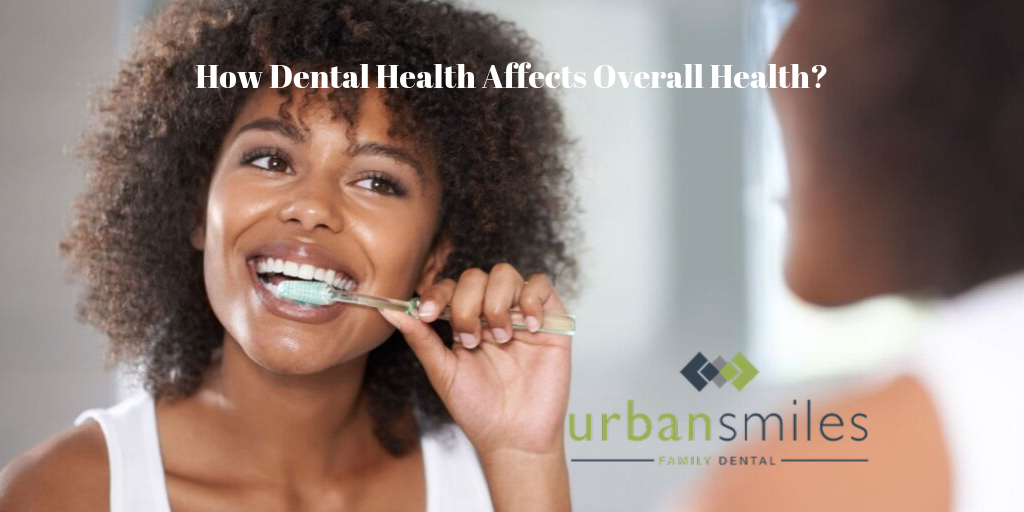
How Dental Health Affects Overall Health?

By | blog, Featured | No Comments

Do you know how dental health affects overall health? If no, this post is for you.

Focusing on oral health would not only be beneficial for teeth, but it also creates a great impact on overall health. Proper oral health care assures the well-being at every stage of your life. Researchers have found that a person’s dental health and overall health are related in some manner.

Your mouth and body, both are integral to each other. Bacteria from your mouth may cause infection in other parts of your body. This is the reason why when you go to a doctor, they ask you to open your mouth. The doctor checks out saliva flow, it helps them in knowing what’s going on in your body.

As your mouth is the entry point to your respiratory and digestive tracts, poor oral health may lead to many diseases. Poor oral hygiene may cause diseases such as oral cancers, heart disease, diabetes, respiratory disease, periodontal disease, stroke, gum disease, osteoporosis, and rheumatoid arthritis.

If you are facing any issue in maintaining good oral health, then you must take a visit to “Urban Smiles Family Dental” by Dr. Rob Andrew. Here at “Urban Smiles Family Dental”, we provide treatment for all types of dental problems whether it is gum infection, bad breath, tooth decay,  tooth erosion, tooth sensitivity, toothaches or any other dental problem.

How to Protect Oral Health from Dental Problems?

Add below-given things in your day to day life to protect your oral health from the dental problems mentioned above:

1. Brushing

To improve your oral and overall health, brushing plays a significant role. You must brush at least two times a day with a soft-bristled brush, one in the morning after waking up and second at the night before going to bed.

2. Use mouthwash

Sometimes, some food particles get between your teeth even after you brush and floss your teeth. In such situations, it is advisable to use mouthwash.  Mouthwash removes food particles remains even after the brush and floss.

3. Limit sugar items

Overconsumption of sugary food items causes cavities and destroys your teeth. Sugar and sugary food items invite dangerous bacteria that destroys tooth enamel and which leads to cavity in the tooth.

4. Eat Healthy Food

Dental problems also occur due to improper diet. You should avoid eating junk food items, instead of that, start eating healthy foods.

5. Replace the Toothbrush Before Three Months

Due to the usage of the toothbrush, its bristles get splayed and using splayed brush would not clean your teeth effectively. Hence, replace your toothbrush within three months of time duration, if the bristles get splayed.

Here, we can see how your dental health affects your overall health. Once you will start focusing on your oral health by having regular checkups, limiting sugary food items, eating healthy, etc., you would be able to resolve your dental problems. 

For any queries, visit our “Urban Smiles Family Dental” or call us. 

Connect with Urban Smiles Family Dental Below:

Twitter Facebook Instagram LinkedIn Youtube Pinterest Snapchat

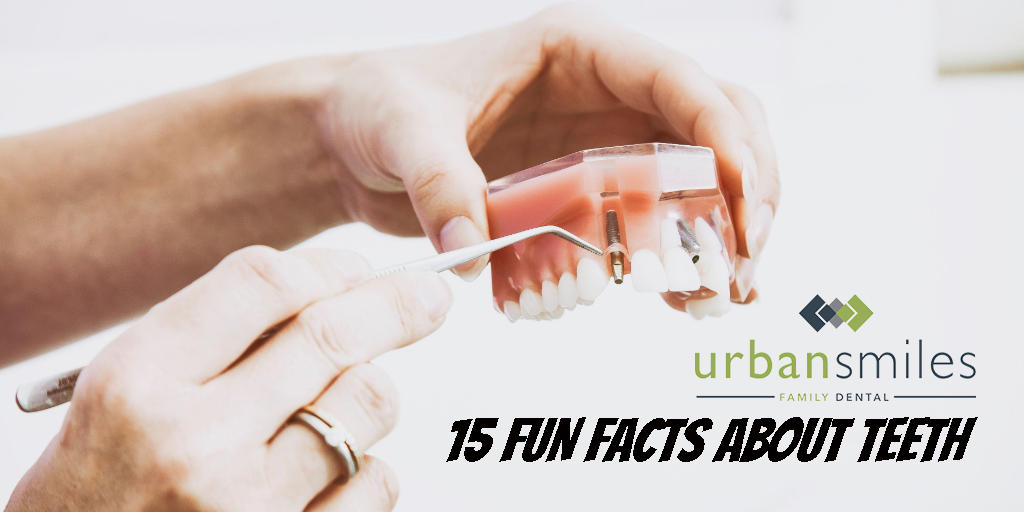
15 Fun Facts about Teeth

By | blog | No Comments

Here at Urban Smiles Family Dental with Dr. Rob Andrew we believe it’s important to not only treat our patients with high quality care, but to educate them about their oral health so they can be empowered to live healthy lives.

Below are 15 fun facts about teeth we thought you’d enjoy learning about.

  1. Today’s tooth fairy needs a lot more silver than she did in 1900, when she left an average of twelve cents. In 1998, the tooth fairy left an average of one dollar. In 2019, the going rate for a lost tooth reached an all-time high with an average rate for of $3.70 per tooth.
  2. The enamel on the top surface on your tooth is the hardest part of your entire body.
  3. Teeth start to form even before you are born—milk teeth or baby teeth start to form when the baby is in the womb, but they come through when the child is between 6-12 months old.
  4. Humans use four different types of teeth (incisors, canine, premolars, and molars) to cut, tear and grind their food.
  5. Humans have only two sets of teeth in their entire lifetime—baby teeth and permanent teeth. Once you have your permanent teeth, make sure you take good care of them.
  6. No two people have the same set of teeth—your teeth are as unique as your fingerprint, so be proud of your unique set of teeth.
  7. Your mouth produces over 25,000 quarts of saliva in a lifetime—that’s enough to fill two swimming pools. Saliva has many uses, including assisting you with your digestion and protects your teeth from bacteria in your mouth.
  8. An average person spends 38.5 days brushing their teeth over their lifetime.
  9. Many diseases are linked to your oral health, including heart disease, osteoporosis, and diabetes.
  10. One third of your tooth is underneath your gums—that means only two thirds of your tooth’s length is visible.
  11. If you get your tooth knocked out, put it in milk and hold it in your mouth—this will help your tooth to survive longer. Make sure you see a dentist right away.
  12. On September 20th, China celebrates “Love your Teeth Day” – a national holiday promoting oral awareness among its 1.2 billion people.
  13. Certain cheeses including aged cheddar, swiss and monterey jack have been found to protect teeth from decay.
  14. Not only is tooth decay the most common and widespread disease of humankind, it is the oldest. Skulls of pre-historic humans have been examined and tooth decay has been found.
  15. Athletes are 60 times more likely to damage their teeth when not wearing a mouth guard during athletic activities.

Connect with Urban Smiles Family Dental Below:

Twitter Facebook Instagram LinkedIn Youtube Pinterest Snapchat