
Tag

dentist Archives - Page 6 of 6 - Urban Smiles Edmonton Dentist

How Should I Clean My Teeth?

By | Featured | No Comments

Do you ever notice that sometimes you have a bad breath even though you brush your teeth and floss at least twice a day? The reason is not because you use the wrong brushing or flossing technique. It may in fact be because you don’t clean your tongue properly or at all. The tongue is an important feature of the mouth that makes it possible to articulate speech and eat. We wouldn’t be able to whistle a tune, taste anything, chew, swallow or tell someone about our day without the tongue.

Just as bacteria builds up on and between teeth, and hardens into tartar or plaque if not cleaned, bacteria builds up on the tongue. The surface of the tongue is usually covered by tiny bumps known as papillae. Food particles, bacteria and dead skin cells often collect between the grooves of these bumps and with time, they are covered by a layer of mucus. Trapped between the surface of the tongue and mucus, these bacteria can lead to bad breath and discoloration of the tongue, hence the importance of cleaning it. But how should you go about it?

There are two main ways to properly clean your tongue as recommended by Dr. Andrew & Urban Smiles Family Dental i.e. scraping and brushing. The latter involves gently scrubbing the surface of your tongue back and forth with a moistened toothbrush. This can be achieved effectively by spitting out excess toothpaste after brushing your teeth but before rinsing your mouth. Scrub your tongue with your toothbrush that still has some toothpaste residue. Also scrub the cheeks as well as the roof of your mouth before rinsing to get an all round clean.

A tongue scraper offers an alternative solution to keeping your tongue clean and avoiding bad breath. It is available in many drug stores and is designed to glide along the surface of the tongue and take off the layer of mucus as well as any debris or bacteria it traps. For effective use, stick your tongue out and place the scraper at the back of the tongue and slide it down towards the tip. Rinse the scraper and repeat the process, ensuring that you move from the back to the tip to prevent accidental ingestion of the debris and bacteria. Rinse the scraper thoroughly then brush and floss your teeth once done.

Cleaning your tongue is something that should be part of your daily dental health routine. With opportunities for bacteria and food particles to build up on your tongue on a daily basis, the importance of cleaning your tongue every day cannot be stressed enough.

Urban Smiles Family Dental Staff Writer:
Twitter Facebook Instagram Youtube Pinterest Snapchat

What Should I Do If I’ve lost All My Back Teeth?

By | Featured | No Comments

Many adults have one or two or more missing teeth. Some even miss all of their back teeth. The posterior teeth play a vital role in chewing. They also affect overall bite and help ease the excessive pressure on the front teeth brought about by eating. As such, they have an incredibly crucial role in the oral cavity. According to Dr. Andrew and Urban Smiles Family Dental, losing your back teeth can have a series of negative consequences even on the remaining teeth, ligaments, jaw muscles, joints and gums. Such include:

  • Decrease in chewing efficiency
  • Loss of the alveolar jaw bone as well as reduced residual bony ridges
  • Painful dysfunction of the temporomandibular joint, which plays a vital role in connecting the skull with the lower jaw
  • Rotation, tipping as well as migration of the adjacent teeth
  • Extrusion of unopposed teeth

With such risks, you’d think that people would place an urgency on replacing lost back teeth as compared to the front teeth. Due to their exposure, many people prefer to replace their lost front teeth and assume that since no one can see the posterior, there is hardly any need to replace them. However, from a dental point of view, it is important that you consider replacing them at least for the loss of function created by their absence if not aesthetics.

It’s also important to note that just because posterior teeth are out of view, losing one or more of them won’t change your appearance with time. A good example of an effect of losing back teeth is that the facial height reduces and this becomes incredibly visible after a while. Unfortunately, that is not the worst you will experience after losing back teeth. Some of the consequences mentioned above, say for instance shifting of teeth, can set off a chain of reactions that eventually weaken the overall dental system. With a back tooth missing, the adjacent teeth shift at an accelerated rate and if they shift too much, they can become worthless with time. Shifting of the teeth can also change the relationship of how the teeth and jaw are attached, increasing the risk of periodontal disease.

Replacement can help curb some of the above consequences. Professional dentists like Dr. Andrew recognize implants as an effective way of replacing missing posterior teeth. Some of the obvious benefits include their ability to contribute to the bite, easy to clean, free standing restoration and the fact that the restoration process doesn’t affect the adjacent teeth. Bridgework and removable partial denture are also effective solutions for curbing the effects of missing back teeth.

Urban Smiles Family Dental Staff Writer:
Twitter Facebook Instagram Youtube Pinterest Snapchat

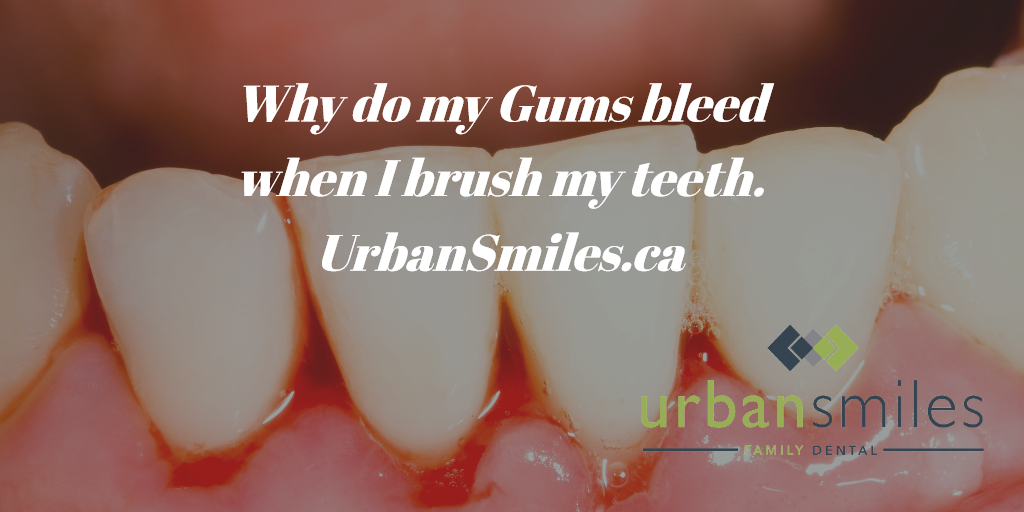
Why Do My Gums Bleed When I Brush My Teeth?

By | Featured | No Comments

Noticing that your gums bleed when you brush your teeth can be an alarming discovery. The main question you’ll be asking when that happens is why? Why are your gums bleeding when you brush your teeth? There are many reasons why gums bleed, some of which are temporary while others are a cause for concern. It’s important that you make an appointment with Dr. Andrew & Urban Smiles Family Dental to figure out if any of the following are the causes for gum bleeding.

  1. Gingivitis

This is usually the first stage of gum disease. It occurs when plaque at the gumline and on your teeth isn’t removed by flossing or brushing infects the gums, leading to the symptoms of gingivitis. Examples of symptoms experienced include swollen gums that become too tender and bleed during brushing. This stage responds well to regular dental checkups and good flossing and/or brushing habits.

  1. New flossing routine

Not many people know this, but altering your normal flossing routine to a new can lead to bleeding gums. For instance, if you have started flossing more frequently to remove plaque from between your teeth or haven’t remembered to floss in a few days, you may start to notice some bleeding when you brush your teeth. This should clear up within a few days when your new flossing routine regularizes.

  1. Medications

According to the American Dental Association, some thinning medications are a common cause of bleeding gums. Such medications usually reduce the ability of blood to clot, thus making bleeding easier. It’s important that you let your dentist know everything about any medications you may be on as well as your experience using them.

  1. New toothbrush

Of course, a change in toothbrush especially from one with soft bristles to one with rough bristles, can lead to bleeding gums. If that’s the case, consider reverting back to a toothbrush with softer bristles. You should also consider talking to your dentist for recommendations on what you should use.

  1. Pregnancy gingivitis

It is not uncommon for pregnant women to experience swollen gums and bleeding when brushing their teeth. This condition is clinically referred to as pregnancy gingivitis. This occurs due to hormonal changes during pregnancy that alter the response of the body to bacteria that causes gum disease. The symptoms often clear up after pregnancy, according to the American Dental Association. Regular brushing and flossing as well as dental checkups can help prevent the symptoms from becoming worse.

Twitter Facebook Instagram Youtube Pinterest Snapchat

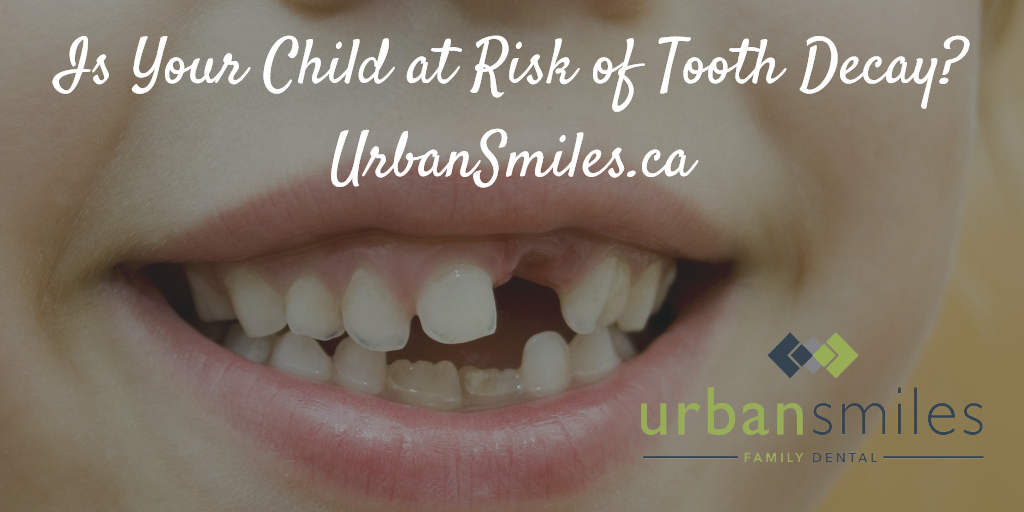
Is your Child at Risk of Tooth Decay?

By | Featured | No Comments

If you have experienced a decayed tooth, you can begin to imagine how uncomfortable it would be for a kid. Unfortunately, tooth decay plagues many children that it should largely due to their sweet tooth. Sodas, candy, chocolate and other sweet bites loved by children are the source of tooth trouble.

How does it happen?

The mouth has naturally occurring bacteria. When you eat food containing sugar and starch like soda, candy or sweets, some of it sticks on the teeth and gums. When bacteria feed on these sugars, acid is produced. This acid eats into the tooth enamel over time, making a cavity.

An appearance of a white spot on the tooth is a sign that the enamel has worn away and weakened. Dr. Rob Andrew says at this point the decay can be reversed. Saliva contains minerals such as calcium and phosphate, and also fluoride from toothpaste. The tooth enamel can gradually build up again over time with good dental hygiene. If this is not done, a cavity develops which can only be remedied by filling.

Preventing tooth decay

The best fight against tooth decay is good dental hygiene. The mineral Fluoride, commonly found in toothpaste, is the best defense against tooth decay. It can stop and reverse decay. It replaces minerals lost and weakens acid producing bacteria. Apart from toothpaste, the Urban Smiles Family Dental clinic says that fluoride is in other sources;

  • Fluorinated water from water wells. However, this should be taken with care as water containing excessive fluoride can stain the teeth leading to brown teeth.
  • Fluoride gels and varnish that can be applied on the teeth
  • Mouth rinse containing fluoride

Brushing

Proper and regular brushing of the teeth with toothpaste is the best way of getting rid of leftover food particles sticking to the teeth and gums. Children should be assisted and taught how to brush teeth until they are about 7 or 8 years of age.

Visiting to the dentists

Regular dental checkups can identify any sign of tooth decay and remedy any damage. If a child has decay on the permanent teeth, filling could be considered.  The dentist can also apply a sealant on the molars and pre-molars to avoid food being trapped in the ridges.

Reducing sugary foods

Eating of Candy, soda, biscuits and other sweet snacks should be reduced.  Encourage your child to eat these foods after meals and then brush his/her teeth immediately afterwards.

Urban Smiles Family Dental

Twitter Facebook Instagram Youtube Pinterest Snapchat

Does your Child have Bad Breath?

By | Featured | No Comments

Bad breath in children is uncommon but still a problem for some children. Bad breath in a child usually points to a bigger problem. It can be as simple as a dry mouth or as serious as a lung abscess. Prolonged bad breath in a child that is not solved by swishing some water in the mouth or brushing should be looked into more closely.

Dr. Rob Andrew points out the common causes of bad breath;

Dry mouth

Saliva washes away food particles from the mouth. When the mouth is producing less than needed (xerostamia), bacteria can accumulate and lead to bad breath.

Poor dental hygiene

Kids need to brush and floss too. If this is not done regularly and properly, plaque accumulates on the teeth and gums. Bacteria grow on the tongue leading to bad breath. Kids should be taught to brush the teeth too.

Foreign objects

Kids especially those under three tend to stick all manner of objects in their noses. If there is something lodged in the nose, the kid will breathe through the mouth making it dry hence bad breath.

Illnesses

If your kid has a cold or allergy that is making the nose stuffy and blocked, she will try to breathe through the mouth drying it out. More serious illnesses like tonsillitis and lung abscesses can also make the child have bad breath if there is body tissue breaking down.

Food

Strong odor can come from eating foods with strong smells like garlic or onions.

Poisoning

Ingestion of some poisons leaves telltale breath. This includes swallowing turpentine, cyanide, acetone, alcohol, phenol, and salicylate.  The kid’s breath will smell like acetone, bitter almonds or violets. This should signal an emergency and prompt a call to the emergency services.

Eliminating bad breath

  • Instilling good dental hygiene. Be a role model in dental hygiene. Show the child how to brush properly including brushing the tongue. Ensure the kid brushes at least twice a day with kid-friendly toothpaste.
  • Daily flossing to clean particles caught between the teeth.
  • Changing toothbrushes often for better brushing using sharp bristles.
  • Regular checkups by the dentists. Kid friendly dental clinics like Urban Smiles Family Dental will work on your kid without the child developing dental phobia.

Chronic halitosis

This is prolonged bad breath that is not eliminated by the means above.  The best thing is to have the kid looked into more closely the dentist.  Doing this early enough can prevent worsening of a bad condition for example tonsillitis.

Connect with Urban Smiles Family Dental Below:

Twitter Facebook Instagram Youtube Pinterest Snapchat